Table Of Content
- The Meaning Behind “Grease” by Frankie Valli and How Barry Gibb Brought Disco to the Golden Age of Rock and Roll
- Curious About The Meaning of Other Famous Songs?
- Song Meanings & Facts
- The Meaning Behind The Song: The House Of The Rising Sun
- The Modern Versions
- Blues
- The Meaning Behind “Jammin’ Me” by Tom Petty and the Heartbreakers and How Bob Dylan’s Lyrics Angered Eddie Murphy

The meaning behind “House of the Rising Sun” by The Animals is one such song. “The House Of The Rising Sun” has been the subject of much interpretation and discussion over the years. While some believe the song to be about a brothel in New Orleans, others argue that it speaks to the allure and destructive nature of addiction. Regardless of its exact meaning, the song’s universal themes of regret, redemption, and the consequences of one’s actions resonate with listeners of all generations.
The Meaning Behind “Grease” by Frankie Valli and How Barry Gibb Brought Disco to the Golden Age of Rock and Roll
Here, we catch a glimpse of the troubled life the narrator has experienced, tainted by his father’s vices and the hardships of his childhood. There is a house in New Orleans / They call the Rising Sun / And it’s been the ruin of many a poor boy / And God, I know I’m one, they sing in the chorus. The single also charted in Australia (number 14), France (number 36), and Italy (number 54). According to Burdon, this was simply because there was insufficient room to name all five band members on the record label, and Alan Price's first name was first alphabetically. In his 1941 songbook Our Singing Country, Lomax credits the song to Georgia Turner, using Martin's extra lyrics to "complete" the song.
Curious About The Meaning of Other Famous Songs?
House of the Rising Sun: Leadbelly, 1944 – The Bowdoin Orient - The Bowdoin Orient
House of the Rising Sun: Leadbelly, 1944 – The Bowdoin Orient.
Posted: Fri, 30 Sep 2022 07:00:00 GMT [source]
We hope you enjoy the articles and insights they bring to our platform. He is tempted not to go but hasn’t got the willpower to say no, almost like he has given up on himself. A song that, when you try to get to the bottom of what it is all about and where it came from, asks more questions than it answers.
Song Meanings & Facts
The oldest known recording of the song, under the title "Rising Sun Blues", is by Appalachian artists Clarence "Tom" Ashley and Gwen Foster, who recorded it in 1933. Earliest American versions, "House of Rising Sun" was said to have been known by American miners in 1905. The oldest published version of the lyrics is that printed by Robert Winslow Gordon in 1925, in a column titled "Old Songs That Men Have Sung" in Adventure magazine. And when The Animals did record the song they did so expeditiously, in fact in one only take. This is due to them having already perfected singing it on the road while they were simultaneously touring alongside rock-and-roll innovator Chuck Berry. The writer consequently pleads with other mothers, who in his own experience seem more responsible than fathers, to not allow their children follow in his footsteps.
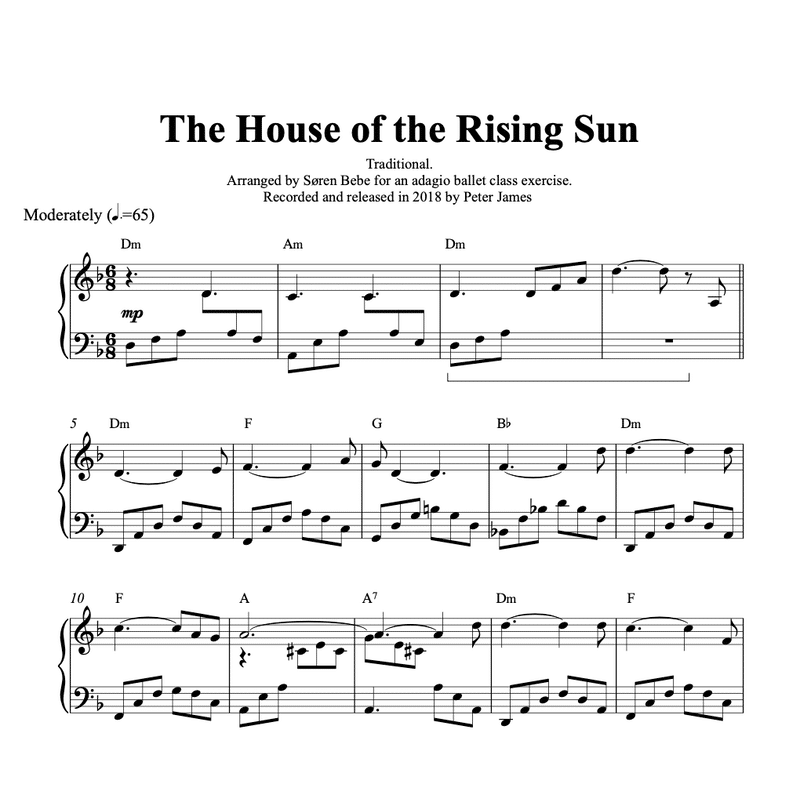
And the insinuation is that his vice is something along the lines of gambling and consequentially excessive drinking. This is because he acknowledges his own father as possessing those weaknesses. And the conclusive message is that somehow this lifestyle has gotten him, the singer, into serious trouble with the law. Moreover he has witnessed “many a poor boy” also have their lives ruined via ‘the house of the Rising Sun’.
The Modern Versions
The song was first collected in Appalachia in the 1930s, but probably has its roots in traditional English folk song. “The House of the Rising Sun” reflects an unpleasant place which has a bad influence on the writer’s life as a boy. The song speaks about picking up bad habits from this house in New Orleans as a young man. The writer describes his mother as a diligent woman who probably wanted him to make the best out of life by working hard and leading a decent life. House of the Rising Sun has stood the test of time due to its captivating storytelling, emotional depth, and memorable melody. The song touches on universal themes and emotions that resonate with listeners across generations.
Blues
Most likely, the song in its original form was a folk song from the UK. So, we shouldn’t be surprised to find references to ‘The Rising Sun.’ It is a common name for an English pub even today. Pubs of two to three hundred years ago were often “houses of ill-repute.” The song was likely carried to America by immigrants who performed it there, from whence local names and traditions became intertwined. The song is often heard in the soundtracks of popular TV shows (The West Wing and Supernatural) and movies (Suicide Squad). I had learned it sometime in the 1950s, from a recording by Hally Wood, the Texas singer and collector, who had got it from an Alan Lomax field recording by a Kentucky woman named Georgia Turner.
The combination of Jim Morrison’s powerful vocals, Ray Manzarek’s haunting organ, and the band’s signature psychedelic sound creates a mesmerizing experience for the listener. In late 1961, Bob Dylan recorded the song for his debut album, released in March 1962. That release had no songwriting credit, but the liner notes indicate that Dylan learned this version of the song from Dave Van Ronk. In an interview for the documentary No Direction Home, Van Ronk said that he was intending to record the song and that Dylan copied his version.
The Meaning Behind “Jammin’ Me” by Tom Petty and the Heartbreakers and How Bob Dylan’s Lyrics Angered Eddie Murphy
Although “The House of the Rising Sun” has a distinct storyline, it is actually based on a folk song that centered on a completely-different character. Moreover ‘the house of the Rising Sun’ in the traditional rendition is considered to be either an actual historical prison or house of working girls. So for instance the reference to the “ball and chain” near the end of the song is largely considered to allude to said penitentiary.
Roy Acuff, an "early-day friend and apprentice" of Clarence Ashley's, learned it from him and recorded it as "Rising Sun" on November 3, 1938. The Animals’ Alan Price is recognized as the writer of the song, along with untraceable traditional sources. The Animals’ version went on to become the most-renowned of perhaps innumerable renditions of “The House of the Rising Sun”. And amongst its accolades is being placed on Rolling Stone’s “500 Greatest Songs of All Time”. Furthermore, it was included in the “500 Songs That Shaped Rock and Roll” by the Rock and Roll Hall of Fame. It has also made the RIAA’s list of “Songs of the Century” and has earned a Grammy Hall of Fame Award.
Dillard Chandler of Madison County, North Carolina sang a variant of the song beginning "There was a sport in New Orleans". The narrative of the lyrics has varied between male and female narrators. The earliest known printed version from Gordon's column is about a woman's warning. The earliest known recording of the song by Ashley is about a rounder, a male character.
However, what makes this song truly exceptional is its rich history and the profound emotions it evokes through its lyrics. The song is also credited to Ronnie Gilbert on an album by the Weavers released in the late 1940s or early 1950s. In the case of “The House of the Rising Sun”, it is claimed to have a resemblance to “The Unfortunate Rake”, a 16th-century folk song which over time has evolved into a huge number of variants. The earliest known variant of “The Unfortunate Rake” laments for a young man dying of syphilis. Other variants lament over the fate of young soldiers, sailors, cowboys or maids, all of whom had lost their life too early. Musicologists say that it is certainly based on the broadside ballad tradition; a type of ballad which differentiated from traditional ones.




No comments:
Post a Comment